
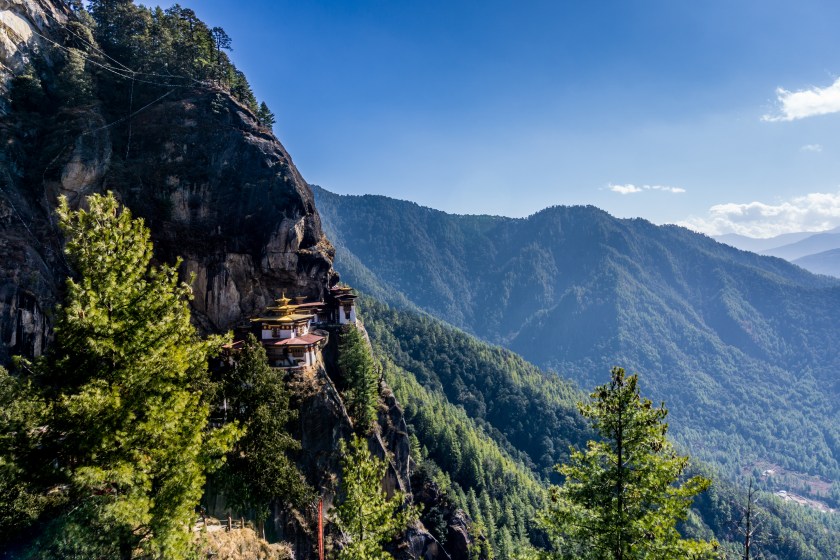
Bhutan – a small country nestled high up in the Himalayas – is largely known for regularly topping the World Happiness Report and measures its progress not by Gross Domestic Product like most countries (including the UK), but by Gross National Happiness.
In other words they measure wellbeing rather than income, and they seem to be doing pretty well on it. In 2012, NPR reported that Bhutan intends to be the world’s first full organic country, as the country considers environmental wellbeing vital to happiness.
Bhutan built on its fascinating profile at the Paris climate summit in December 2015, when it emerged as the country with the most ambitious plan to curb harmful greenhouse gas emissions.
But the cheery nation is not resting on its laurels and has just completed a mass tree planting in a touching, country-wide initative welcoming the latest member of the royal family into the world.
Why 108,000 trees? The biggest religion in the democratic monarchy of Bhutan is Buddhism, which holds 108 as a sacred number.
Tenzin Lekphell, who led the initiative explained: “In Buddhism, a tree is the provider and nourisher of all life forms, symbolizing longevity, health, beauty and even compassion. The number of trees planted was exactly 108,000, as 108 is a sacred number in Buddhism, denoting the cleansing of 108 defilements that impede beings from attaining enlightenment. Hence 108 beads in a rosary.”
King Khesar Namgyel Wangchuck and Queen Jetsun Pema announced the birth of their first child on 5 February and the tree planting took place about a month afterwards on 6 March.
Bhutan is very dedicated to its monarchy and this show of good will is just the most recent display of affection for their royals.
Tshering Tobgay, the Prime Minister of Bhutan tweeted a photo of the saplings being planted, congratulating the organisers on the project, which is called the Tendrel Initiative.
Planting trees with thousands of volunteers to celebrate the birth of HRH, our Gyalsey. Well done Tendrel Initiative pic.twitter.com/i0hxFF9EHa
— Tshering Tobgay (@tsheringtobgay) 6 March 2016
With a small population of 741,919 people – less than the British city of Leeds, which has has 751,500 citizens – every household in Bhutan took part in the planting, with all 82,000 households each planting a tree.
The remaining 26,000 trees were planted in 14 districts across the country by volunteers, and every tree came bearing good wishes.
Lekphell said: “Each sapling encapsulates a prayer and a wish from the person who planted it to His Royal Highness the Prince so that just like the bountiful tree, the Prince also grows up healthy, strong, wise and compassionate.”
Forests and trees are protected by law in Bhutan, one of the world’s last remaining biodiversity hotspots.
A minimum of 60 per cent of the country’s land is under environmental protection, but in fact forest cover currently extends to 72 per cent.
Top image: (cc) Caleb See 2015, made available under an attribution 2.0 generic license
Sources: Treehugger, The Diplomat
 Green Dispatches
Thank you for the lovely, informative post.
LikeLike
Thank you Susann – glad you like it. I’m so new to this, that I’m still trying to work out where the rest of my site went, so bear with me. Thanks for being my first follower!
LikeLike