
This year marks the tenth lights out for the globally celebrated Earth Hour, most famous for iconic buildings from the Sydney Opera House to the Eiffel Tower in Paris shutting down their sky-illuminating lights for 60 minutes, in a show of environmental solidarity.
Earth Hour is an initiative set up by WWF and 2016’s UK theme is ‘sustainable food for a sustainable planet’, with people and businesses volunteering to cook, order and eat food that is healthy for planet and people alike.
There are many interpretations of sustainable, healthy diets available, and different governments don’t necessarily agree on what it should look like.
It can be very confusing to know what this really means in our daily lives.
However, the UK does fairly well on this front, providing guidance in the form of the Eatwell Plate, which offers pragmatic suggestions for an achievably nutritious and sustainable diet.
The Carbon Trust ran an analysis of the Eatwell Plate, publishing the results earlier this month, stating that the recommendations would mean a noticeably lower environmental impact if UK citizens were to take them up.
And WWF UK has put together the Livewell principles which take you one step further in terms of sustainable food choices, which you can find on their site along with shopping lists and recipe ideas.

If you are new to this, here are some easy tips that should help people make some easy choices while out shopping, inspired by Public Health England.
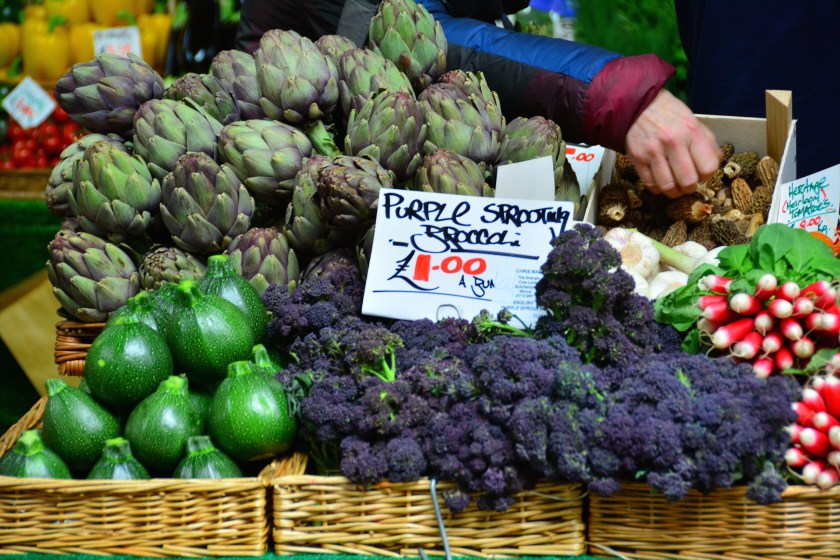
Eat more fruits and vegetables
According to a 2013 report published by the United Nations Food and Agriculture Organisation, the total global greenhouse gas (GHG) emissions from global livestock each year account for 14.5 per cent of all man made GHG emissions – the chief driver of global warming.
And in terms of our health, there are now a body of reports of increased meat consumption leading to a range of cancers, and processed foods contain additives, along with higher levels of sugar and salt – the NHS has plenty more information on this.
The simple rule is to eat a minimum of five portions of fruit and vegetables each day, with the emphasis on vegetables and for maxiumum health benefits, eat a rainbow of colours.
Eat seasonally where possible
We have been lucky enough to have become used to having a world of produce available to us in our supermarkets, all year round.
However eating seasonally allows farmers to work in harmony with the weather and the land. When you force crops out of season, it requires more intensive agricultural systems – for example a greater reliance on pesticides and artificial fertilisers.
According to Sustain, over time this endangers our ability to grow food in the future, with our very soil and water under threat. Seasonal eating can work out more cheaply for consumers, which is along with saving our future food, is another good reason to try it.
Plan ahead
Sustainable resources charity WRAP says UK households are throwing away 4.2 million tonnes of avoidable household food and drink annually, or the equivalent of six meals every week for the average UK household.
This one’s a no-brainer. Few people would start the week thinking that they would happily throw away the cash equivalent of six meals, so this will save you money, while reducing the amount of waste.
Look at the packaging
This is means thinking about the packaging your food is in. Do you really need to buy four potatoes in a shrink-wrapped tray, or can you just put them loose straight into your trolley?
If you think your consumer choices won’t make a difference, then just a couple of weeks ago Whole Foods had to pull a pre-peeled, plastic-encased satsuma from sale after facing ridicule on social media when photos of the fruit on their shelves went viral.
The pre-peeled orange has already been pulled from shelves — is there a more ridiculous product you can think of? https://t.co/ixfNMuA1A2
— 24 (@thisis24) 19 March 2016
So there you have it. Some easy things to remember the next time you go food shopping, which will help both you and our wonderful planet.
Happy eating! Let me know in the comments if you celebrated Earth Day.
Top image: (cc) Martin Pettitt 2015, made available under an attribution 2.0 generic license
 Green Dispatches